Tuesday, June 30, 2015

MORE HERB USES!

Wow! I was surprised how many people asked me about herb based/homemade bug repellent!
Since so many plants repel insects for themselves and each other (That's is something we can revisit later) it only made seance that we (humans) could also benefit.

I found several recipes one is historical (maybe) and one uses homemade (please see homemade air freshener post) or store bought essential oils. Always check a small section of skin before applying ANY bug sprays, homemade or otherwise for a reaction.

This first sounds like it would smell WONDERFUL!


Essential Oil Bug Spray

  • Essential oils: choose from Citronella, Clove, Lemongrass, Rosemary, Tea Tree, Cajeput, Eucalyptus, Cedar, Catnip, Lavender, Mint, etc...
  • Witch Hazel
  • Distilled or boiled Water
  • Vegetable glycerin (optional)

How to Make Homemade Bug Spray

  1. Fill spray bottle (I used 8 ounce) 1/2 full with distilled or boiled water
  2. Add witch hazel to fill almost to the top
  3. Add 1/2 tsp vegetable glycerin if using
  4. Add 30-50 drops of essential oils to desired scent. The more oils you use, the stronger the spray will be. A favorite mix is: Rosemary, Clove, Cajeput, Lavender, Cinnamon and Eucalyptus… it works great and smells good too!
The second one has been posted and re-posted for many years. With each posting is the accompanying story.

Used by thieves during the black plague to keep from getting sick. They used it internally and externally to avoid catching the disease and to keep the flies and other pests away. According to legend, it worked and they survived… but it definitely makes a great insect repellent these days! Its also very inexpensive to make and you probably already have the ingredients in your kitchen!

Vinegar of the Four Thieves Insect Repellent Ingredients:

  • 1- 32 ounce bottle of Apple Cider Vinegar
  • 2 TBSP each of dried Sage, Rosemary, Lavender, Thyme and Mint
  • At least quart size glass jar with airtight lid

How to Make the Vinegar of the Four Thieves Insect Repellent:

  1. Put the vinegar and dried herbs into large glass jar.
  2. Seal tightly and store on counter or place you will see it daily. Shake well each day for 2-3 weeks.
  3. After 2-3 weeks, strain the herbs out and store in spray bottles or tincture bottles, preferably in fridge.
  4. To use on skin, dilute to half with water in a spray bottle and use as needed.
  5. Use whenever you need serious bug control!
(Note: This mixture is very strong and has antiviral and antibacterial properties. It can also be used as a tincture for any illness. For adults, dose is 1 TBSP in water several times a day,for kids over 2, dose is 1 tsp in water several times a day.

So get out there (without bugs) and enjoy summer!

Monday, June 22, 2015

HOMEMADE AIR FRESHENERS

Most commercial air fresheners contain horrible for you chemicals! They are hard on the environment and you, your children and your pets. Some of the chemicals you may find: Formaldehyde, a known carcinogen, Phenol, skin and nervous system irritant, Petroleum distillates such as butane and propane and many other dangerous chemicals.
Plus they cost a ton. So why not make your own?

A super simple recipe is,
2 teaspoons baking soda dissolved in two cups of water
10 to 20 drops of essential oil (More or less..it's up to you)
A fine mist spray bottle

Mix the essential oil in the water with dissolved baking soda put in the mister and spray away!
I change the essential oils with the seasons. I like cinnamon and orange in the fall. Pine in the winter. Rose in spring and lavender in summer. It's totally up to individual preference. It's nice to try new combinations of oils.

A cotton ball with essential oil is another way to cut the car air fresheners. you can hang the cotton ball But I don't. I just soak 2 or 3 cotton balls and put them in a snack size bag.Poke a few holes in it and toss it on the dashboard up near the window. As the sun warms the cotton balls the refreshing scent wafts throughout the car...NICE! I extend the life of these with a little mix of rubbing alcohol and a couple more drops of essential oils once a month. I usually get 3 months use before I pitch and start over. I change the scent with the seasons.

Essential oils are used in everything from homemade salves, cooking, hair treatment skin lotions etc...
I have found 2 things to be true. Use a HIGH quality oil I prefer olive oil. And refrigerate to keep the oil from going rancid. I should mention the olive oil will solidify in the fridge but will liquefy at room temperature after  a couple of hours (then pop it back in the fridge). Also if you are using for cooking just spoon out what you need, no need to wait for oil consistency to return.

You can use fresh flowers, spices or herbs. But you run the risk of mold. Using dried (either store bought or grown and dried yourself) reduces moisture and you'll end up with a oil without worry.
I have read about solar infusions or simply letting the herbs sit in the oil and shaking daily for two weeks. Nope to long to wait!
After searching around the web I found this post. I haven't tried it yet but I sure will.
Enjoy your herbs!

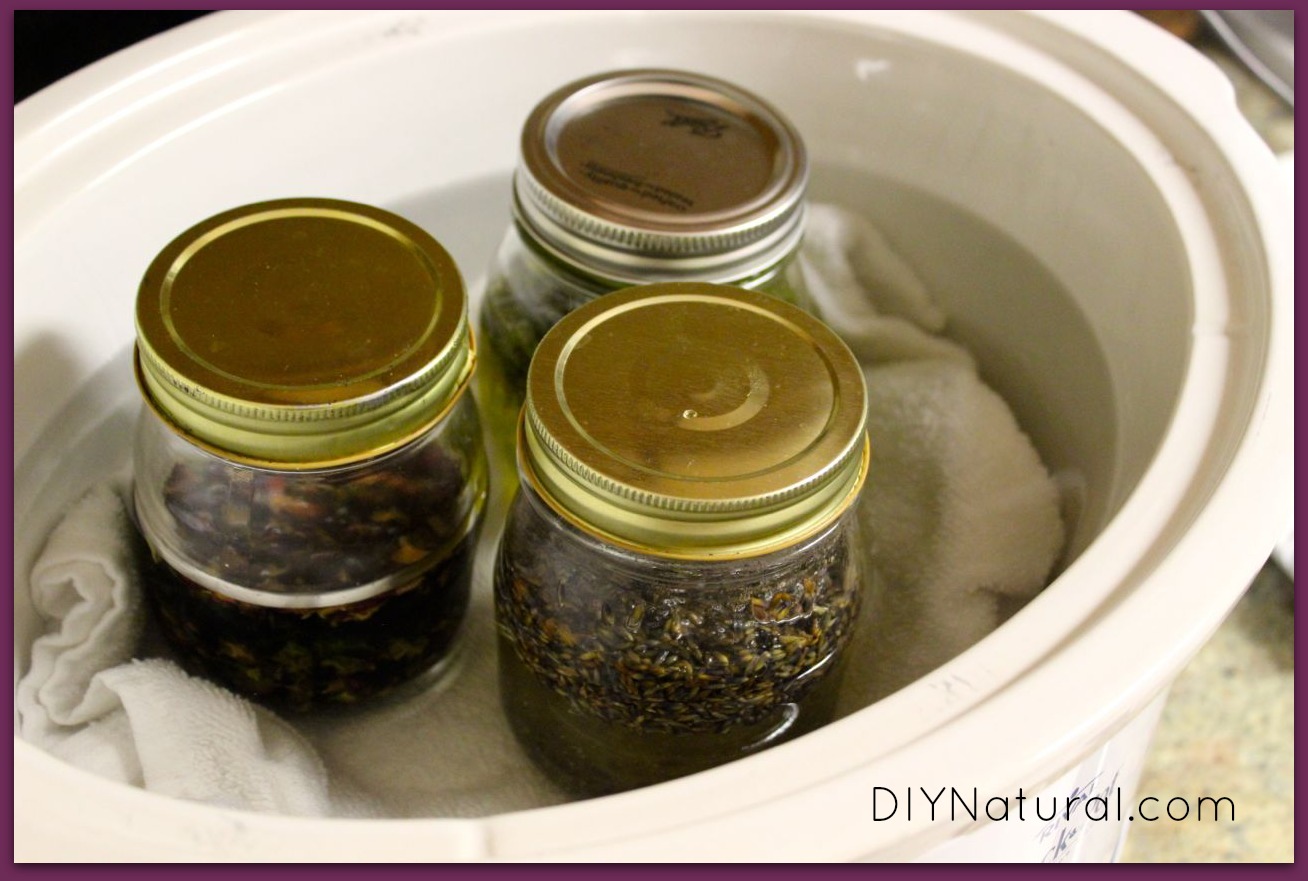
Slow Cooker Method for Herbal Infusions

1. Place a hand towel in the bottom of your slow cooker. This serves to keep the direct heat off jars and promote more even heat distribution, as well as cushioning jars from bumping the pot which could cause chips and breakage. Fill slow cooker about half way with water. Turn slow cooker on “warm” setting to preheat.
2. Prepare herbs by gently rubbing between your palms before adding to a glass mason jar. Fill jars 1/3 – 1/2 of the way with herbs, then cover with oil, leaving at least one inch of headspace in your jars. Stir the herb/oil mixture in each of your jars to cover herbs with oil and release any air bubbles.
http://www.diynatural.com/wp-content/uploads/Herbal-Oil-Infusion-2.jpg
3. Cap jars and place into slow cooker on top of the towel. Allow oils to infuse for 8-12 hours on your slow cooker’s lowest setting. Temperature should remain between 100° – 120°. You may want to check the temperature every few hours, turning off the slow cooker for a bit if needed. Stir or gently shake jars a few times during the infusion process. (Hint: If you have a dehydrator with temperature controls or a yogurt maker, you can also use these appliances to infuse your oil.)
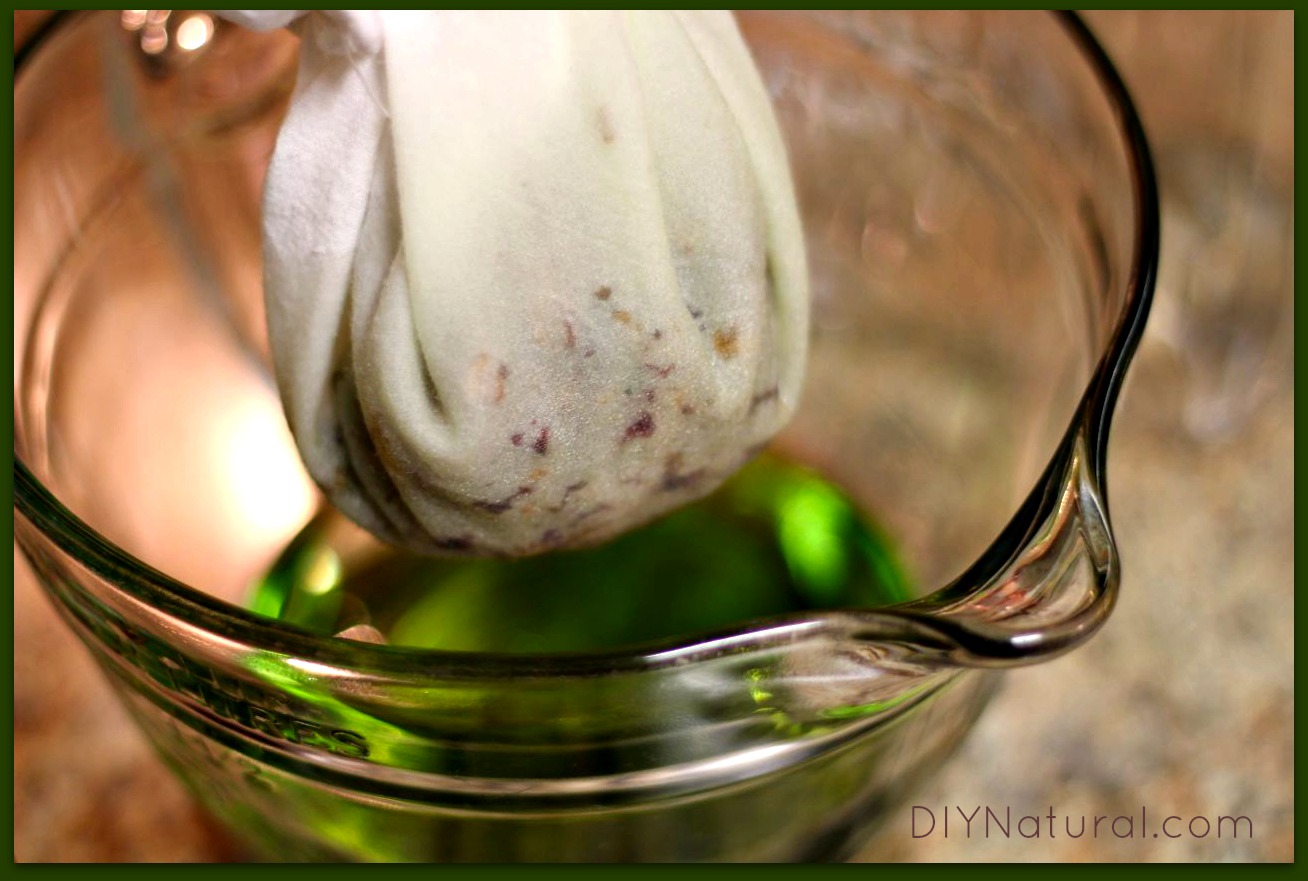
4. Once herbs have been infused, turn off slow cooker and allow to cool to room temp. Strain herbs/flowers out using a tea towel or several layers of unbleached cheesecloth. Compost or discard the spent herbs.
http://www.diynatural.com/wp-content/uploads/Herbal-Oil-Infusion-3.jpg
5. Transfer your infused oils to clean glass jars or bottles and cap tightly. Label your jar with 1) the type of oil used, 2) herb it was infused with, and 3) date. Protect your herbal oils from heat and light by storing in a cool, dark place. Your oils may last a year or more if stored properly.
http://www.diynatural.com/wp-content/uploads/Herbal-Oil-Infusion-4.jpg

Monday, June 15, 2015

CONTACT US!

Well technology is beyond me! I can't seem to set up a way for followers or a way to post anyone's garden/homestead tips. We were able to link in our email (whew)!
Write tips or tricks or question/comments. If you'd like us to publish on this site PLEASE email your article and we'll do our best to get it up ASAP.
Or if you just want to say hi, email us @
wildthistlefarm@aol.com
We look forward to hearing from everyone.

Thursday, June 11, 2015

Functional doesn't need to be unattractive!

Our herb garden is prominently displayed in our front yard. We have pretty planter boxes with green beans between our raised beds. We have Horseradish, Chives, Hyssop, Catnip, Tarragon, Oregano, Lemon and Bee balm and Rhubarb. All of these plants bloom. We attract pollinators have lovely hues of purple blooming almost the whole season, and we get to harvest the needed herbs to make the rest of our food production palatable!


All of the herbs in the raised beds are perennial, so I only need to add a little compost in the fall and early spring. They will produce for YEARS with minimal work. The benefits far outweigh the initial cost/work. Many herbs also (as if it weren't enough already) have huge medicinal benefits.
Here is a short (by no means complete) list of some of the historic medicinal uses of herbs.
NEVER EVER not seek professional care for illness. But in addition to western medicine there are so many natural treatment. ***PLEASE, ALWAYS CHECK WITH A DOCTOR BEFORE STARTING ANY SELF SUPPLEMENTAL TREATMENT ***!

There are approximately 75-100 kinds of herbs and flowers in the National Library of Medicine herb garden. Plants have a long and rich history of medicinal use and, even in the era of modern medicine, their medicinal properties are still sought after.

One of the classics of herbal medicine was written over 350 years ago, Culpeper's The Complete Herbal, published in London in 1649. This has proved to be an enduring book, going through 100 editions.
Nicholas Culpeper (1616-1654) was born into a landed gentry family and studied at Cambridge University, but abandoned his studies upon the death of his fiancee who was killed by lightening. He apprenticed with a London apothecary and set up practice among the poor, often charging no fee for his herbal remedies.
He favored British plants over the more exotic species and published his book in English rather than Latin, an unusual move, so that the common people (at least those who could read) could understand what he wrote.
A rather colorful figure with strong opinions (he received a chest wound from a musket shot fighting in a civil war), Culpeper died at age 38 from tuberculous which was probably compounded by his war wound and his intensive smoking.
Culpeper had infuriated the medical establishment during his lifetime. Apothecaries frequently “practiced” medicine, diagnosing illnesses and prescribing medication, but they charged less money than physicians. In many cases apothecaries were the only healer the poor could afford.

We include below descriptions of some herbs adapted from Culpeper's book. The listed plants are among the almost 100 in the NLM herb garden. A cautionary note: do not to try this at home! Culpeper was not a scientist his plant remedies are not necessarily proven therapies.
For a more complete listing of herbs and their medicinal properties, see MedlinePlus' herbs and supplements section.


Chamomile – Anthemis nobilis – Chamomile is said to take away weariness and pain/inflammation of the bowels. The oil from the flowers can be used against many pains and aches, including joint cramps. Chamomile is also helpful in healing migraines and regulating menstrual periods.
Cinquefoil – Potentilla reptans – Cinquefoil is used to reduce inflammation. It can also treat sore mouths and ulcers. The juice is known to aid jaundice. As well as helping hoarseness of the throat and cough, Cinquefoil can be applied to painful joints.
Columbine – Aquilegia vulgaris – Because columbine is slightly poisonous, its astringent properties are mainly exploited in lotions and used externally.
Feverfew – Chrysanthemum parthenium - Feverfew is known as an effective treatment for migraine headaches and fevers. It may also help ease diseases like arthritis.
Foxglove – Digitalis purpurea – A pure form of the plant is used to strengthen cardiac contractility and regulates heart rhythm.
Golden Rod – Solidago virgaurea – Golden rod can be used as a treatment for painful menstruation, arthritis and eczema. Externally, it can be applied to skin ulcers to stimulate healing.
Lady's Mantle – lchemilla vulgaris - This herb has been used to cure excessive menstruation. The root of lady's mantle has been recommended to stop bleeding.
Lavender – Lavandula angustifolia – Lavender prevents fainting and allays nausea. In oil form, it is often used in therapeutic baths to reduce stress. It can also lower blood pressure. A small amount makes a useful application on skin diseases like eczema and psoriasis.
Lovage – Levisticum officinale – Lovage is used as a digestive aid. It eases inward pains. This herb is also known to diminish redness of the eyes.
Pennyroyal – Mentha pulegium – Pennyroyal is said to ease headaches. It has been used as a remedy for colicky pains in the abdomen. It has also been known to ease the feverish symptoms that come with measles and whooping cough.
Poppy – Papaver rhoeas – The poppy is known to soothe coughs and induce sleep. The petals are helpful in treating asthma, bronchitis, whooping cough and angina.
Primrose – Primula vulgaris – Primrose, a sedative, induces rest and sleep by reducing tension. An infusion of the root taken in spoonful doses is effective in healing headaches. It has also been used for treating gout and rheumatism.
Rosemary - Rosmarinus officinalis – Rosemary has been used to treat headaches, epilepsy and poor circulation. It can also be used as a disinfectant in the form of mouth wash and also to treat fever. It is also reported to stop dandruff and improve memory.
Sage – Salvia officinalis – Sage is helpful for head pains, hoarseness and cough. It is one of the best known remedies for laryngitis, tonsillitis and sore throats. An infusion of the herb sweetened with honey is mildly laxative and stimulates menstrual flow.
Sorrel – Rumex acetosella or Rumex acetosa – The cooling leaves of sorrel are known to allay thirst and aid in fevers. These leaves also serve as a diuretic.
Vervain – Verbena officinalis – Vervain is known to be a good remedy for coughs and colds. It aids against the wheezing and shortness of breath that comes with fevers.
Wintergreen – Pyrola minor – Wintergreen is known for its cooling properties, flavoring everything from mouthwash to gum. Medicinally, it can be used topically on wounds and internally to aid ulcers in the kidney and bladder. The plant contains a natural antiseptic.
Woodruffe (Sweet) – Galium odoratum – Woodruff can be taken for its tranquilizing effects to treat insomnia. Used as an infusion, it can strengthen the stomach and removes obstructions from the colon.
Yarrow – Achillea millefolium – Yarrow is used topically for wounds, cuts, and abrasions. An infusion of yarrow is known to speed recovery from sever bruising. Yarrow flowers are used for various allergic mucus problems, including hay fever.

Sunday, June 7, 2015

Installing a Solar Clothes Dryer

Installing a Solar Clothes Dryer sounds so technical, in our younger days we called it a clothes line.

Clean Clothes are important to your health, we have watched a lot of survival shows and none them address this issue about clean clothes, Clean close will keep you warmer in the winter time, because dirty clothes draws in moisture and moisture wicks away heat. In the summer time or warmer weather dirty clothes traps in body moisture and make for breading grounds for fungus and bacteria which then attacks your skin and can create additional health problems

You can install different kinds of clothes lines one of which is the old "T" type where you string your line between the two "T" shape posts. we are going to install an umbrella type of  clothes line. We picked this one up at the Home Depot for just under $40 dollars.


Basic tools you need;
Post Hole Digger
1 60# bag of concrete
Concrete Mixing Tray
Small Shovel
Post Level


The umbrella type is a nice choice to use, it takes up less space. Space that you could use for other things. You can fold it up for storage when not in use, which up here in the north is a few months during the year.

Again using the umbrella type or any other type of clothes line can save on energy. Plus you don't have a gas/electric dryer heating up a small room in your home which then transfers the heat to the rest of your home during the summer months. And it is 50% less wear and tear on the clothes themselves. If you worry about fading while hanging in the sun, turn your clothes inside out.
Initially clothes can feel "stiff" but with a little wear they soften up You can also add distilled vinegar to the final rinse, for a full load 1/4 cup . Since the warm breeze dry's your clothes they smell wonderful! That alone is worth the cost. But you have no need of dryer sheets to help with static and scent. It's a little more work but the return is worth the effort both economically and ecologically.

Now the black base plug is a little short and that the instructions call for putting gravel in the hole up to the bottom of the plug, we live in a rather windy area and that a few inches of concrete base seemed to little, so I glued a section of PVC to the bottom of the plug just to hold it together while we poured the concrete. The added PVC will allow to drain if water were to get in it. We can pour in more concrete and make a much stronger base.


With the new attachment attached, we dig our hole to the right depth in this case it was 24".

Now it's time to mix our concrete, add water a very little at a time, keep stiring until your mix is like peanut butter.

Place the mounting tube in the center of the hole you have dug and start putting the concrete in a little at a time. let it set up over night.

Finally install your Solar Clothes Dryer aka Clothes Line.


Now your ready to have dry clothes, again this will save you money on your utility bills, fresh clean smell of laundered clothes is good for moral and over all they'll just plain feels good! This project's total cost was just under $45 dollars.

Wednesday, June 3, 2015

Raised Garden Beds

Many times having a raised garden bed just makes better sense. It's easier to maintain, or the ground just isn't suited enough for a garden. As you can see in the picture below the ground here would just take a very large amount of work to get to any point of growing any healthy plants.


First we put up a string line to lay the blocks. 


We then lined the bottom with recycled cardboard as seen in the picture below. Next is to fill in the bed. 4 bags of top soil, 4 bags of composting manure, 4 large bags of garden soil and 1 block of peat moss. 


First we poured out the top soil. Spreading it out in the bottom to hold down the cardboard.


Followed by the composting manure.


Next to follow is the peat moss


Topped off with the gardening soil.


 Then we tilled it all together.


Planning out the plants layout is next. Here we are planting tomato plants they will be closer to the north side of the garden bed leaving room for smaller plants to the south side being out of the shade of the tomato plants. (Tomato's love carrots)


These plants came in a biodegradable containers so we had to score the containers open so that the roots can grow more freely.


now that they are spaced and planted water very well. As you can see the plants are off to one side of the bed.  In front of the tomato's we will be planting carrots in one bed and beets in the second bed.


Now this project will cost all together less then $90 .00. This is a good investment, it's a one time cost. From this point on we will be adding our own compost, and we will have very healthy and very fruitful pants.